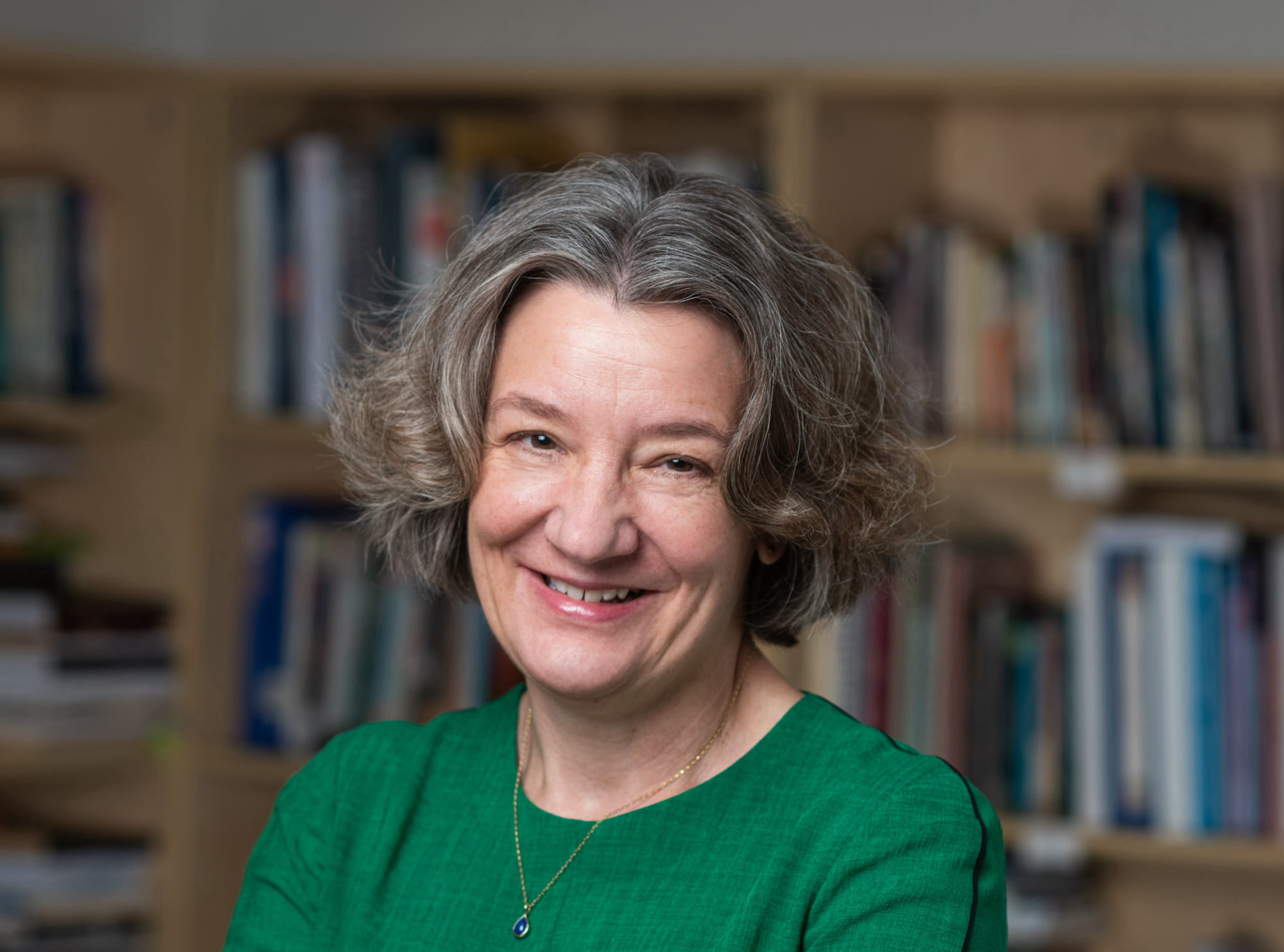
Alumna Sue Flood (Zoology, St Mary’s College, 1983-1986) has been recognised with an Order of the British Empire (OBE) in the New Year Honours 2026.
After studying at Durham, Sue went on to work with her childhood hero Sir David Attenborough in the BBC’s Natural History Unit before becoming a full-time photographer, adventure travel tour leader, motivational speaker and author.
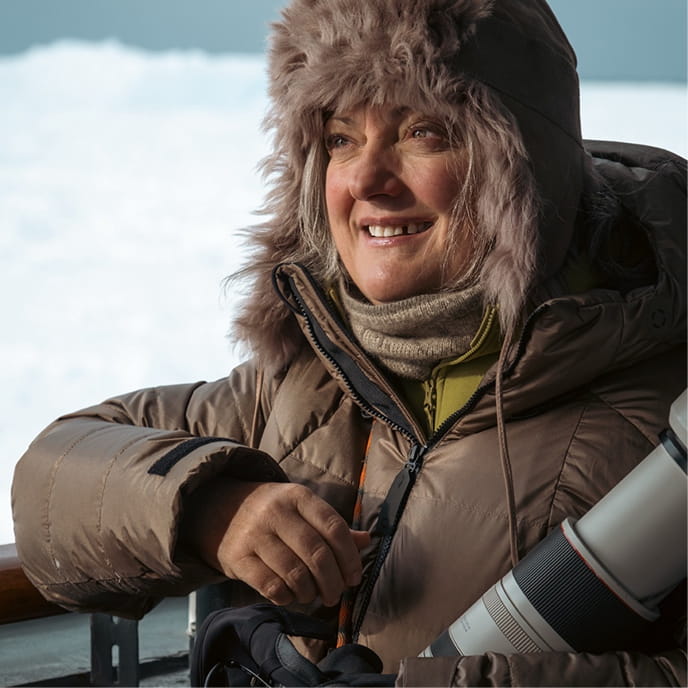
We caught up with her recently to hear about her fascinating career, 40 years after graduating:
How did your Zoology course inspire your career with wildlife?
When I was asked what I’d like to do when I left school I replied I’d like to make Wildlife films with David Attenborough. I was told that no one gets to do this. Luckily, I ignored this advice!
Zoology seemed a great way to help me achieve my dream. I was delighted to be accepted into Durham. My degree was a great foundation to follow my dream of pursuing a career as a wildlife filmmaker and photographer.
What are your memories of your time at Durham?
Durham is a beautiful city in which to study. Friends tell me that they recall me always having a camera in my hand. I enjoyed the collegiate system. I was based at St Mary’s and made firm friends on my course, one of whom has remained one of my closest friends. My time at Durham has certainly helped make me who I am today. It was fun to return a few years ago to give a talk about my career at the Durham Union.
How did your career begin?
Of course, there are lots of people who want to work with David Attenborough. After graduating, I had to work hard to broaden my experience. I volunteered at Bermuda biological station for Research and the Queensland National Parks and Wildlife Service as well as well as qualifying as a diving instructor.
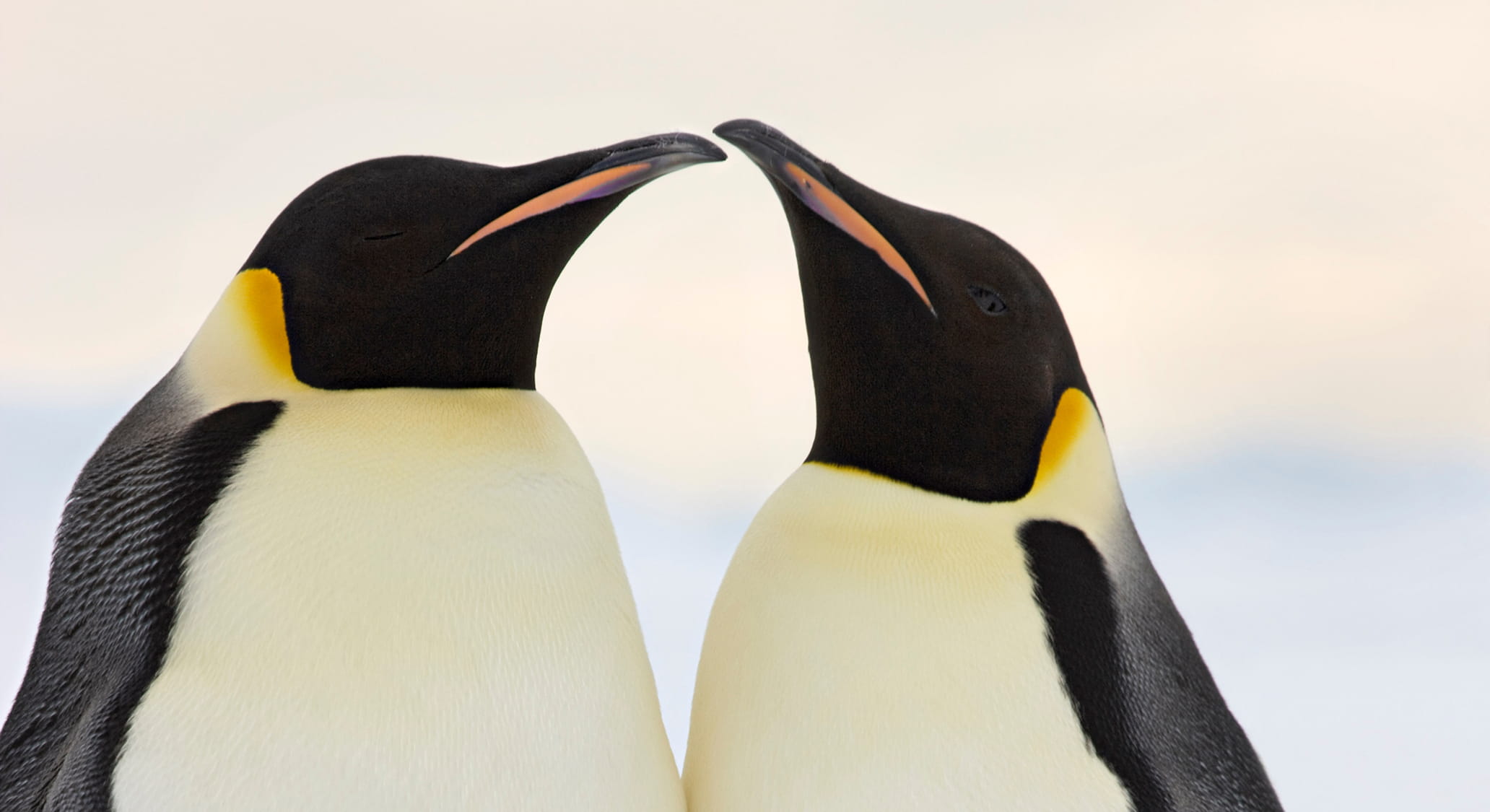
I was a keen, self-taught photographer. At the BBC Natural History Unit, I had the privilege of working with some world class camera people. I picked up a lot from them when we were working in the field. I’ve had some incredible adventures: swimming with narwhals, camping with emperor penguins, diving with humpback whales in Tonga and camping on the Arctic sea ice with Inuit hunters.
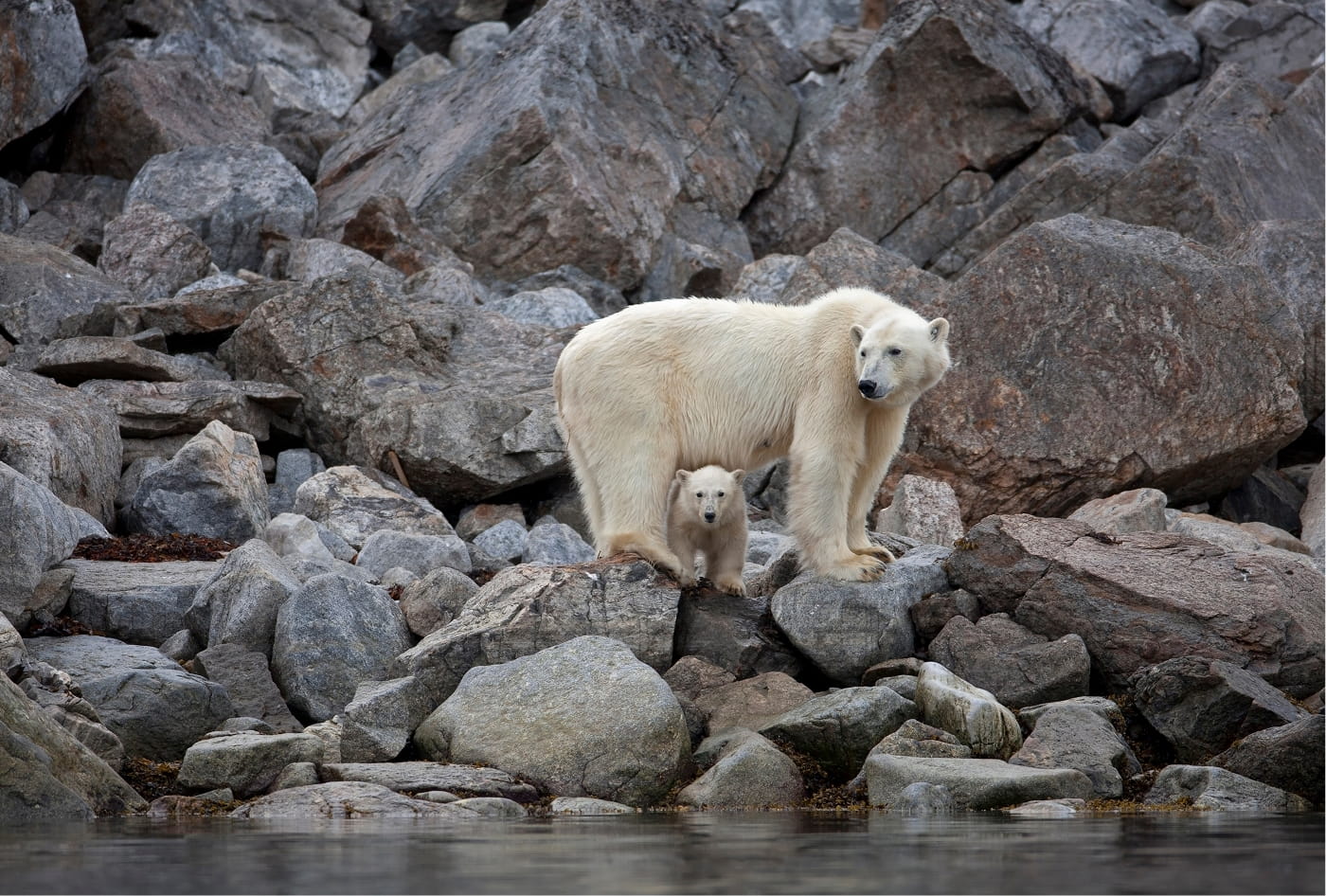
Whilst I was working on The Blue Planet (a job I describe as better than winning the lottery), my first article was published by BBC Wildlife Magazine. One of my photos of a great white shark appeared on the cover of a National Geographic magazine. I decided to leave the BBC and concentrate on my photography. I’ve worked on all seven continents, but the polar regions are particularly close to my heart. Whether it’s polar bears in the arctic or emperor penguins in the Antarctic, these iconic animals and their habitats are under threat.
My next book, Midnight Sun, with my friend and business partner, Ian Dawson, is a collection of our favourite polar images.
What or who has been the greatest influence on your career?
There are three people who have influenced me enormously.
Firstly, my late father, Howard, who was an officer in the Merchant Navy. His tales of the Far East had me enthralled as a child. My father’s enthusiasm for his adventures at sea lit a spark which has never extinguished. Adventure and the sea must be in my blood!
Secondly, of course, Sir David Attenborough. When I got my first researcher job at the BBC Natural History Unit, seven years after writing my first letter to them, it was literally a dream come true. He’s influenced me for decades and is responsible for me pursuing this career.
The third person is my late ex-husband, Doug Allan, a brilliant wildlife cameraman who tragically passed away in Nepal earlier this year. Doug was a brilliant filmmaker, stills photographer, diver, polar specialist and a passionate conservationist. We shared many adventures. I’ll be forever indebted to him for some life-changing experiences.
The investiture for my OBE for “Services to Science, Conservation and the Natural World”, is at Windsor Castle. I’ll certainly be thinking of Dad, David and Doug on this special day. I’m still pinching myself and I intend to use this incredible honour as a springboard to help further my conservation efforts.
What advice would you offer to students graduating from Durham this Summer?
I would tell them to follow their dreams, whatever they may be. That’s what I did. It wasn’t an easy path but it’s one which has brought me enormous satisfaction.
To be part of the team that has produced award-winning documentaries and inspired interest in the natural world and its conservation is a massive privilege. If you want to do something badly enough, I truly believe you’ll get there. So, stick at it!