Artificial Intelligence is already reshaping how we live, work and learn. From climate science and healthcare to education and industry, its use continues to grow.
At the same time, questions of responsibility, skills and human oversight remain central to how AI should be developed and used. At Durham, we are engaging with these questions through research, leadership and enterprise, with a shared commitment to preparing people and communities for tomorrow’s world.
Over the past year, conversations about AI have taken place across the University. From an event with business leaders chaired by our Chancellor, Dr Fiona Hill, to a panel discussion of experts at Convocation, and through the work of student entrepreneurs supported by the Hazan Venture Lab, we are taking a thoughtful and collaborative approach. Together, these activities show how we are contributing to a future in which AI supports people, strengthens communities and addresses real world challenges.
From ideas to impact: student enterprise and climate innovation
Alongside research and leadership, student enterprise plays an important role in how we prepare for tomorrow’s world. Through Venture Lab, we support our students in turning ideas into practical solutions, connecting academic knowledge with real‑world needs.
One such venture is Feasibly, a start‑up emerging from the Venture Lab that is addressing one of the UK’s most significant and costly climate challenges: renewable energy planning. As demand for clean energy grows, delays in planning and development have become a major barrier to expanding renewable infrastructure.
Feasibly is exploring how data‑driven and AI‑enabled tools can support more efficient planning processes. By helping stakeholders make better informed decisions, the venture aims to reduce delays and support the transition to renewable energy.

We need to scale energy installations rapidly, and that starts with building in the right places. By automating spatial data analysis and communication, key stakeholders in critical infrastructure can communicate instantly. We are building the AI for infrastructure that builds itself.”
Beth Holloway
Co-founder at Feasibly
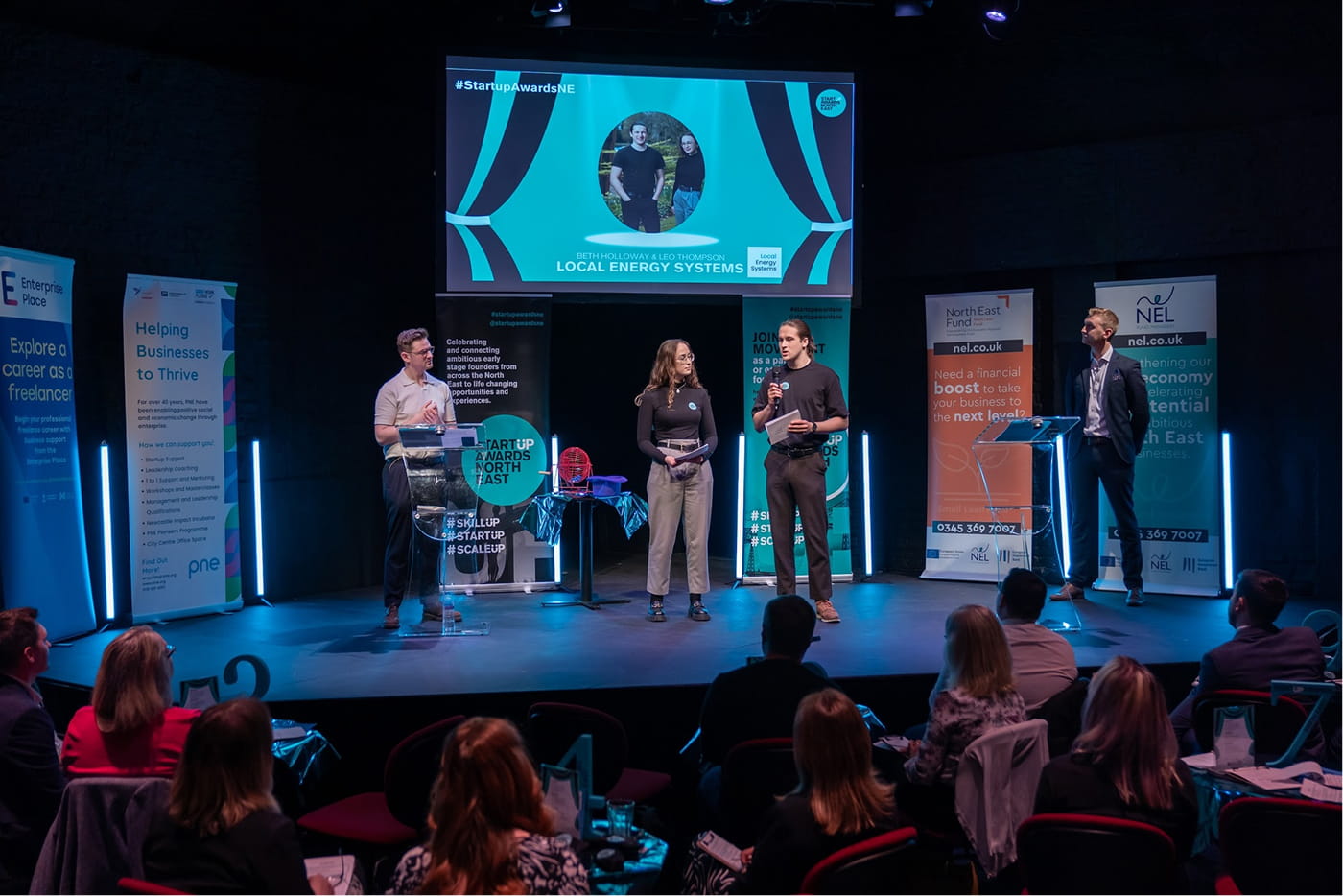
Still in its early stages, Feasibly reflects the wider ambition of our student enterprise community, bringing together technical skills, environmental awareness and an understanding of policy and systems. It also shows how interdisciplinary thinking can support solutions to complex societal problems.
Venture Lab provides students with mentoring, accelerator programmes and access to alumni expertise, helping founders test ideas, refine their thinking and build confidence while creating meaningful connections between current students and graduates.
Connecting with alumni throughout our journey motivates us as we witness their achievements and absorb the valuable insights they share.”
BETH HOLLOWAY & LEE THOMPSON
Co-founders at Feasibly
Supporting innovation at scale: the Blueprint Start-up Challenge
This pipeline of ideas is further strengthened through the Blueprint Start-up Challenge; Durham’s flagship student start‑up competition. Following 96 applications, six finalist teams have been selected to compete in the final in June for a top prize of £10,000, with more than £50,000 in funding allocated across the competition. The final will be judged by a panel including Durham alumnus and Hazan Venture Lab supporter Jonathan Hazan (Computer Science, Hatfield College, 1988-1991).
Many of this year’s ventures demonstrate how AI and data‑driven thinking can be applied to real‑world challenges across sectors. These include:
- Tooti, an AI‑powered platform delivering personalised music education at scale
- VivaEdu, using technology to assess student understanding and support academic integrity
- Robotnik, combining AI and robotics to deliver chemical‑free agricultural weeding
- STEMUp, applying data‑driven approaches to identify untapped STEM potential
- Lexo, a speed‑reading and comprehension training platform designed to improve how users process information
- Ventureships, connecting students and employers through project‑based problem solving
While varied in focus, these ventures share a common theme: using AI, data or digital innovation to improve access, efficiency and decision‑making.
Supported by alumni, partners and expert mentors, the Blueprint Start-up Challenge helps students develop ideas into viable ventures. It also creates opportunities for alumni to engage directly with emerging innovation, whether through mentoring, judging or investment.

It is an honour to work with the students and see first-hand the impact of my donation, which is providing opportunities they would not otherwise have had. I look forward to seeing Venture Lab continue to develop and inspire further generations to create transformational businesses.
Jonathan Hazan
Global impact: research shaping the AI conversation
These themes of responsibility, collaboration and human oversight are also central to our research community, and were explored further at our annual meeting of Convocation in February. Convocation brings together alumni and University leaders to share highlights and future plans.
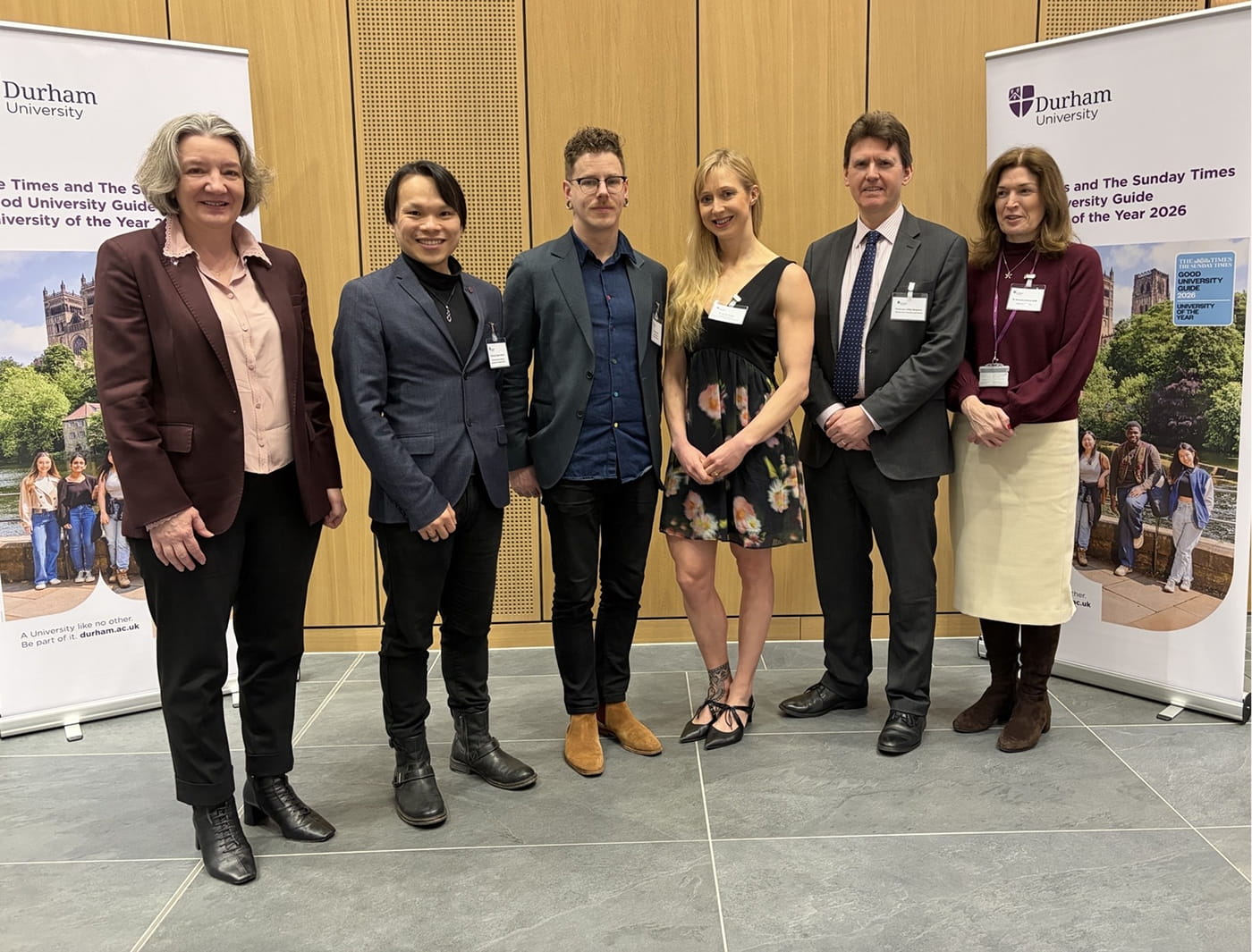
The event featured a panel chaired by Professor Mike Shipman, Deputy Vice-Chancellor and Provost, alongside Professor Hubert Shum, Dr Sarah Heaps and Dr Travis LaCroix. Together, they examined how Artificial Intelligence is shaping tomorrow’s world and how research can inform both opportunity and risk.
The discussion highlighted the pace of AI development and the need to consider how humans interact with these systems. Questions of accountability, reliability and control were central, as were the ethical and social implications of increasingly capable technologies. They also underscored the strength of interdisciplinary AI research at Durham, spanning computer science, psychology, philosophy, statistics and the social sciences.
Audience questions reflected growing public interest in the everyday impact of AI, including its role in learning and how it should be governed. Professor Shipman emphasised the importance of research and education in ensuring that AI development remains grounded in human values.
For alumni, Convocation offered insight into how research at Durham is helping to shape informed debate and practical outcomes, while reinforcing the value of interdisciplinary collaboration.

Local influence: leadership, place and responsibility
Building on these global perspectives, we also explored the regional implications of AI through a Chancellor in Conversation event in January. The discussion focused on the role of AI in business, skills and regional development, and how national ambitions can translate into meaningful benefits for the North East of England.
Held at the Waterside Building, the event welcomed more than 200 students, staff, alumni and regional partners. Dr Fiona Hill was joined by Henri Murison and Grant Brown, bringing together academic, policy and industry perspectives.
The panel emphasised that AI‑driven growth depends not only on technology, but on investment in people and infrastructure. Speakers highlighted the importance of applying new technologies to existing industries, particularly in regions with a strong industrial heritage.
Professor Fernandes described AI as “a very smart lab assistant”, reinforcing its role in supporting human expertise rather than replacing it. Dr Hill similarly emphasised the central role of people, noting that workforce development must come before large‑scale investment in technology.
For attendees, the discussion reinforced the importance of regional engagement and highlighted the role of universities as trusted spaces for dialogue.

Working with the Durham Venture Lab team not only gave us the tools to build and manage a business but also to find our feet within the environmental movement and carve out a space for ourselves in the world.”
BETH HOLLOWAY & LEE THOMPSON
Co-founders at Feasibly
A shared responsibility for the future
Across leadership events, research forums and student enterprise, a clear message is emerging. Artificial Intelligence offers significant opportunities, but it also demands careful consideration. At Durham, we are committed to approaching AI with curiosity, responsibility and collaboration.
We are preparing our students not only to use new technologies, but to understand their impact, question their limitations and apply them thoughtfully. Through research, we are contributing to global conversations on ethics, governance and human‑AI interaction. Through enterprise, we are supporting practical applications that address real world challenges.